Back to Blog
February 28, 2026 Tech Pro Team
Building Autonomous Systems in 2026
A technical deep dive into the architecture of modern, self-healing AI systems.
Building an autonomous system in 2026 requires a fundamental shift in how we think about software architecture. We are no longer writing deterministic code; we are orchestrating probabilistic intelligence.
The Core Components
- The Brain: A highly capable LLM (often a mix of a powerful cloud model for complex reasoning and a fast local model for routine tasks).
- Memory: Vector databases (like Pinecone or Milvus) combined with graph databases to give the agent long-term recall and contextual understanding.
- Tools: APIs that allow the agent to interact with the real world—sending emails, querying databases, or executing code in a secure sandbox.
Self-Healing Architecture
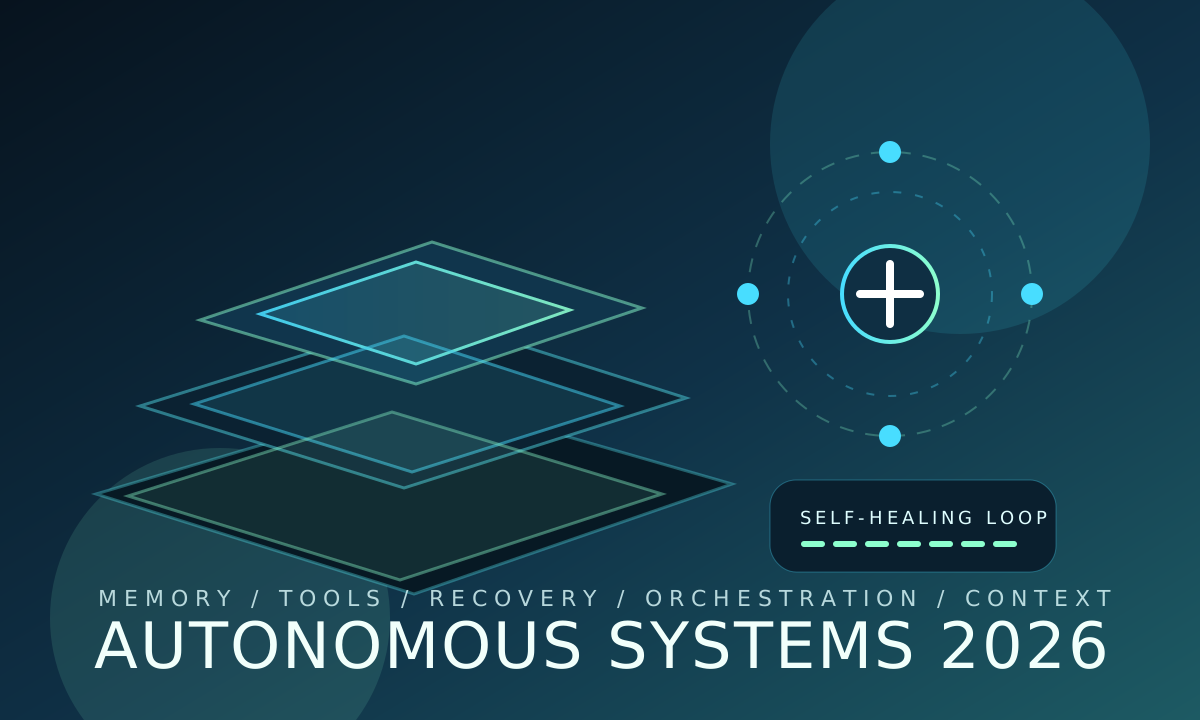
The most critical aspect of a 2026 autonomous system is its ability to heal. When an API endpoint changes or a tool fails, the agent should be able to read the documentation, rewrite its own integration code, and continue functioning without human intervention.
This is the standard we build to at 757 Tech Pro. We don't just build apps; we build intelligent systems that adapt and evolve.
#AutonomousSystems
#SoftwareArchitecture
#VectorDatabases
#AIEngineering